
Best Cell Phone Plans & Carriers in Anchorage, Alaska

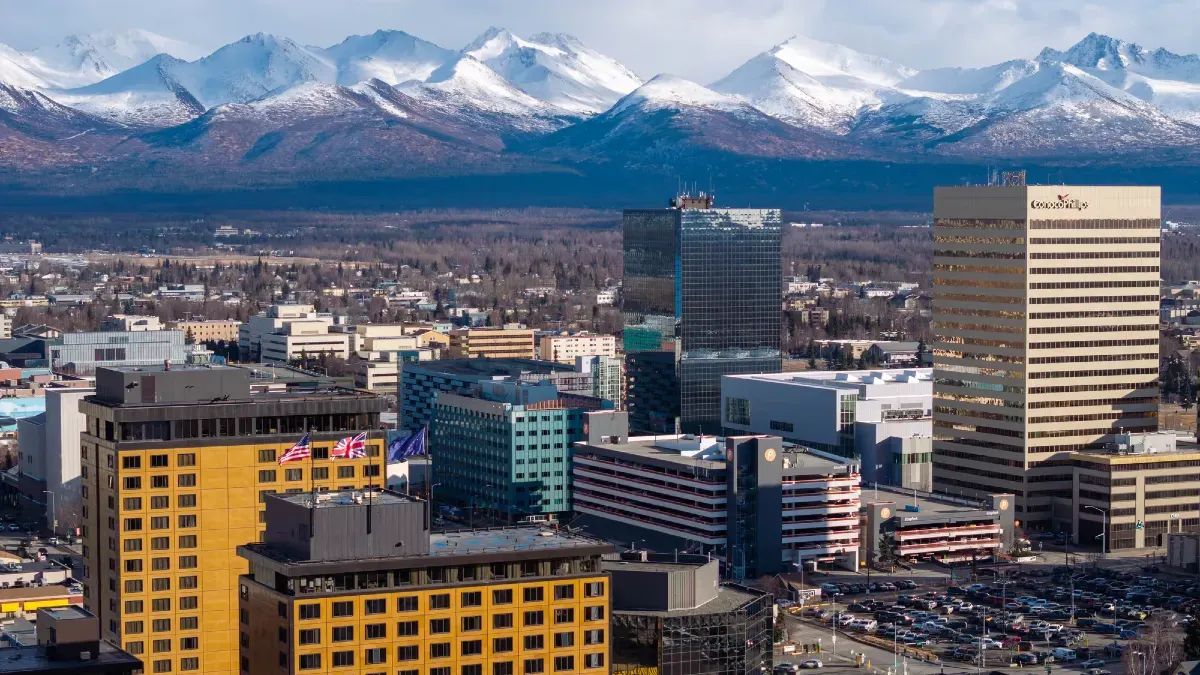
Imagine Anchorage, Alaska—not just a city, but a sprawling urban "bowl" squeezed between the dramatic Chugach Mountains and the icy waters of Cook Inlet. It is the crossroads of the state, holding nearly 40% of Alaska's population and serving as the primary logistics hub for the entire Arctic.
While it feels more like a standard US city than Juneau, Anchorage faces its own unique connectivity battles. The topography is deceptive; you might have perfect 5G in Midtown, but drive ten minutes up to the Hillside, and the "mountain shadow" can kill your signal instantly.
In December, the challenge compounds: ice-loaded trees, extreme cold draining batteries, and the sheer necessity of a working phone for safety on icy roads make your choice of carrier critical.
This guide breaks down cell service in Anchorage for late 2025, helping you navigate the mix of local giants and national carriers to stay connected in the largest city in the Last Frontier.
Choosing a Cell Phone Plan in Anchorage
In Anchorage, the "Big Three" national map doesn't apply the same way it does in Seattle or Los Angeles. The infrastructure here is a mix of native towers and critical roaming agreements.
As you make your choice, keep these Anchorage-specific realities in mind:
- The "Road System" Rule: If you stay in the Anchorage Bowl, most carriers work fine. But if you drive south to the Kenai Peninsula or north to Denali, coverage changes drastically. AT&T generally offers the most consistent continuous signal along the highways. Verizon works well in the city but switches to roaming (often on GCI) quickly once you leave urban limits.
- The Hillside Factor: Many of Anchorage's most desirable homes are located on the "Hillside" (lower slopes of the Chugach). This terrain creates notorious dead zones where signal passes over homes rather than reaching them. If you live here, Wi-Fi Calling isn't a luxury—it's a requirement.
- Bundling is Big: The local provider, GCI, dominates the home internet market. Because of this, many locals choose GCI mobile plans to get "Alaska-sized" bundle discounts, even if their mobile network has occasional customer service hiccups.
- Winter Safety: In December 2025, a dead battery is dangerous. Cold weather zaps lithium-ion batteries faster than you think. Coverage matters, but so does keeping your phone warm. A working signal does nothing if your phone dies at -10°F.
- T-Mobile Warning: T-Mobile still has no native network in Alaska.1 They rely entirely on roaming (mostly GCI). While this works for tourists, T-Mobile aggressively polices "permanent roaming." If you move to Anchorage and keep your T-Mobile plan, they will eventually terminate your service for excessive off-network usage.
Anchorage Cell Phone Coverage
Anchorage benefits from being the priority market for every carrier in the state. Tower density is higher here than anywhere else in Alaska. However, the "Bowl" shape means signals can get trapped or blocked by the abrupt rise of the mountains to the east.
What's Working Well (as of December 2025):
- Midtown & Downtown Saturation: The core business districts (Midtown, Downtown, U-Med district) have excellent saturation. You will find robust 5G from both AT&T and GCI here, capable of high speeds.
- The Glenn Highway Corridor: The commute from Eagle River to Anchorage is very well covered. The highway acts as a clear line-of-sight corridor for towers, ensuring fewer dropped calls during the morning rush.
- Fixed Wireless Options: Because fiber can be hard to dig in frozen ground, 5G Home Internet (Fixed Wireless) from GCI and AT&T has become a reliable alternative for home Wi-Fi in spots where cables are old or slow.
What Could Be Better (as of December 2025):
- Turnagain Arm Drive: Driving south on the Seward Highway toward Girdwood is stunning but spotty. Signals bounce off the cliffs and get absorbed by the water. Expect reliable service to cut out around McHugh Creek and be intermittent until Girdwood.
- Earthquake Reinforced Buildings: Many Anchorage buildings are heavily reinforced for seismic activity. These dense materials (steel/concrete) kill indoor signal faster than wood-frame construction.
- The "Vampire" Drain: During the dark winter months, your phone works harder to find a signal through dense, snow-laden evergreen trees (which contain water and block RF waves). This can lead to faster battery drain and slightly lower signal bars in wooded neighborhoods like Rogers Park or parts of Spenard.
Our Overall Score: 88/100 (Updated for December 2025)
Anchorage offers a modern, reliable cellular experience that rivals mid-sized cities in the Lower 48 if you are in the bowl. The score loses points for the abrupt coverage drop-offs on the Hillside and the confusing roaming limitations for carriers like T-Mobile.
Network Performance in Anchorage
Here is how the major players stack up in the city as of late 2025:
| Provider | Role | 5G Status | Best For... |
| AT&T | The "Reliable standard" | Native 5G | Best overall coverage on the road system; strong signal in the Bowl. |
| GCI | The Local Powerhouse | Native 5G | Residents who want internet bundles; best rural/village coverage if you fly out. |
| Verizon | The Runner Up | LTE / Roaming | Strong urban LTE; relies on GCI roaming for 5G and rural areas. |
| T-Mobile | The Tourist Option | Roaming Only | Short visits only. Do not use for residency. |
The Best Signal By Neighborhood
In Anchorage, zip codes are large, so looking at "Neighborhoods" is more accurate for judging signal.
- Downtown / Midtown (99501, 99503):
- Verdict: Excellent.
- Details: Tower density is highest here. AT&T and GCI blaze with 5G speeds. Indoor coverage in the federal building or large hotels can be spotty without a DAS (Distributed Antenna System), but outdoors is flawless.
- Anchorage Hillside (99507, 99516):
- Verdict: Difficult / Spotty.
- Details: This is the most challenging populated area. As you go higher up Rabbit Creek or O'Malley, you lose line-of-sight to the "Bowl" towers. AT&T tends to hold a signal slightly better here due to tower placement, but residents almost universally rely on Wi-Fi Calling.
- Eagle River / Chugiak (99577, 99567):
- Verdict: Very Good (Corridor) / Poor (Valley).
- Details: Living near the highway means great signal. However, if your home is tucked deep back into the Eagle River Valley (towards the Nature Center), signal drops to zero quickly as the valley walls narrow.
- Girdwood (99587):
- Verdict: Good Local / Poor Transit.
- Details: The town of Girdwood itself has a dedicated tower (mostly GCI/AT&T) that serves the ski resort well. However, the 45-minute drive from Anchorage to Girdwood has several "dead zones" along the cliffs.
Comparing Providers in Anchorage
AT&T
AT&T is widely considered the safest bet for anyone who drives the road system (Anchorage to Fairbanks, or Anchorage to Homer). They have the most extensive "native" LTE network that doesn't rely on partners.
- Best Plan: Unlimited Premium PL.2 You want high-priority data so you aren't slowed down during local events like Fur Rondy or the Iditarod start.
GCI (General Communication Inc.)
GCI is an Alaska institution. They have the best rural coverage (in the bush), but in Anchorage, they trade blows with AT&T.
- Pros: True native 5G in the city. If you travel to villages (Bethel, Kotzebue, Nome) for work, GCI is mandatory.
- Cons: Customer service can be frustrating, and their plans are often expensive unless bundled with home cable/internet.
Verizon Wireless
Verizon entered the Alaska market later.3 They built a good network in Anchorage proper, but they stopped building towers in the wilderness.
- Reality Check: If you are in Anchorage, Verizon is great. If you drive south to the Kenai, your phone will switch to "Extended Network" (Roaming on GCI). This usually works fine for calls, but data speeds can throttle significantly.
FAQ: Anchorage Mobile Life
Q: Do I need a special "Alaska Plan"?
A: No. Alaska is included in domestic coverage for all major US carriers.4 You will not be charged "international" rates.
Q: Does the cold affect my signal?
A: Not directly, but it affects your equipment. LCD screens become sluggish and batteries die rapidly in sub-zero temps. Keep your phone in an internal pocket against your body heat when outside.
Q: I'm moving to JBER (Joint Base Elmendorf-Richardson). What works there?
A: Both AT&T and GCI have excellent coverage on base. Verizon is solid in the housing areas but can have weak spots near the flight line/hangars due to interference and reinforced structures.
Q: Is Starlink useful in Anchorage?
A: For most people in town, cable/fiber is cheaper and faster. However, if you live high on the Hillside or in a deep pocket of Eagle River where cable hasn't been run, Starlink is a very popular and effective solution.